SIGNAL OF THE DAY: Is Apple giving up on Privacy? A CyberSec expert’s opinion
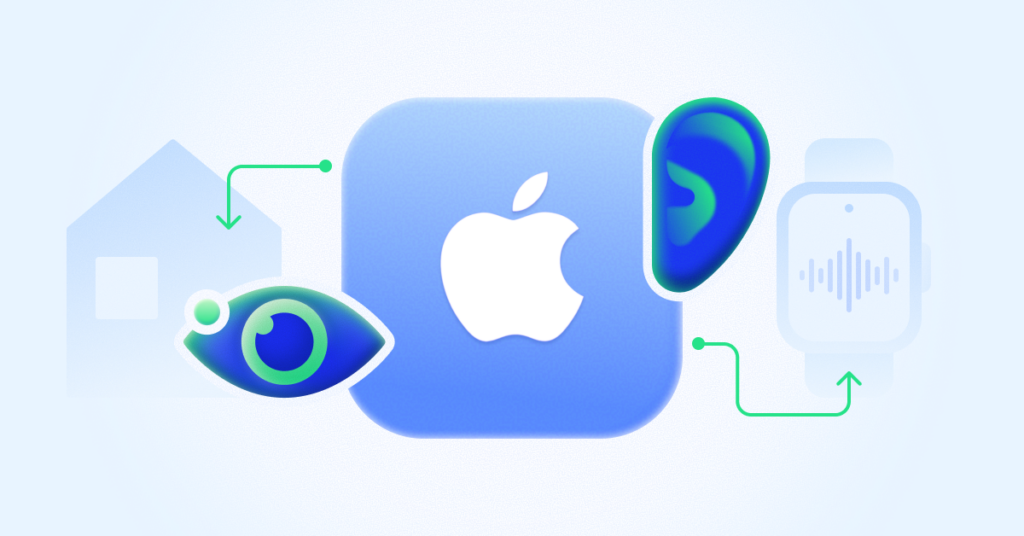
As Apple Watch’s new listening features – Siri Recap and Live Rewind – are heading into beta, and HomeView ships on November 13, our cybersecurity expert and Information Security Manager at Incogni, Miguel Fornés, argues that Apple’s era as the uncompromising defender of consumer privacy may be quietly ending:
“For years, Apple justified its premium pricing by championing privacy as a fundamental human right. Many consumers gladly paid the “Apple Tax,” trusting the company’s unyielding stance on data protection over the invasive, ad-subsidized models of other Silicon Valley giants. Privacy was not merely a marketing slogan but definitive armor that made Apple the natural first choice for security-conscious users worldwide.
But in the race for the Generative AI market, that foundational stance seems to be crumbling.
The release of the Apple Watch Series 12 and Ultra 4 introduces a worryingly new precedent: ambient, constant audio surveillance. Powered by the new S11 chip, features like “Live Rewind” and “Siri Recap” require the device to continuously listen to and transcribe your daily life.
“As a security engineer, I always favored Apple devices for their trustworthy privacy-first stance.“
Unfortunately, this doesn’t seem to be just an isolated hardware-hidden catch; it aligns with the direction of the new Siri AI: to deliver the personalized, proactive assistance Apple promises. Siri AI technically requires constant ambient sound processing to build real-time context from your environment. While Apple predictably hides behind promises of end-to-end encryption and local Secure Enclave processing, the reality is that wearers are transforming into walking wiretaps. The watch is now capturing and summarizing the private conversations of everyone nearby, coworkers, family members, and strangers, without any visual indicator, explicit warning, or basic consent.
Another example of this new stance is directly linked to the recent release of HomeView, which effectively acts as a persistent, unblinking eye and ear inside our homes. And while Apple insists that camera footage is securely processed locally or routed through its Private Cloud Compute architecture, they’ve quietly built a paywall around true peace of mind. So to actually store, review, or analyze those recordings to see what triggered an alert, users must pay the “Apple Tax” again for an ongoing iCloud+ subscription, which securely holds the footage for 10 days. In my opinion, it creates a cynical dynamic: your safe haven is being constantly monitored by default, but verifying exactly what the AI saw and heard in your home now requires a monthly premium.
As a security engineer, I always favored Apple devices for their trustworthy privacy-first stance. Their reputation was hard-earned among engineers, with facts such as:
- Local cryptography: In 2013, Apple squeezed enterprise-grade HSM architecture into a mobile device, isolating biometrics and cryptographic keys on a dedicated “Secure Enclave Processor” to ensure local-only processing.
- App tracking transparency: Introduced in iOS 14.5, ATT fundamentally broke the ad-tech industry’s “hidden” data supply chain. Apple choked off the telemetry pipelines for data brokers and companies like Meta. It proved that Apple was willing to inflict billions of dollars of damage on competitors’ models to enforce user consent at the OS level.
- Post-quantum protection and the no-backdoor doctrine: Apple’s reputation for cryptographic rigor skyrocketed during the 2016 San Bernardino FBI dispute, when the company famously fought a federal court order to build a “backdoor” into iOS to unlock a shooter’s iPhone. Apple set a cultural and technical benchmark for privacy, which continued to advance with upgrades such as the PQ3 protocol to protect iMessage.
But this aggressive pivot made around Watch Series 12 suggests a fear of losing relevance to emerging AI companions and advanced health trackers, to the point of sacrificing the very principle that helped build the current Apple empire.
Much like the fierce consumer backlash against its ill-fated 2021 CSAM photo-scanning proposal, which Apple paused and later abandoned, this normalization of ubiquitous, non-consensual audio recording reveals a grim truth. In the desperate bid to outpace competitors like OpenAI and Whoop by aggressively harvesting heart rate data every 5 seconds and transcribing our most intimate conversations, Apple’s era as the ultimate, uncompromising defender of consumer privacy has quietly come to an end.”

Currently serving as the Information Security Manager at Incogni, Miguel Fornés has over 16 years of international experience navigating heavily regulated financial sectors. Grounded in a rigorous systems engineering background, Miguel has expertise backed by elite global credentials, including CISSP, CISA, CEH, PCI QSA, and ISO 27001 & ISO 27701.
For more community discussions, privacy news, and product updates, join our Incogni subreddit.