Incogni vs Aura – A Comprehensive Buyer’s Comparison
Wondering which service better fits your needs?
Both Incogni and Aura are effective tools for protecting your privacy.
But their approach differs.
Incogni’s focus is clearly defined: being the best data removal service.
Aura, on the other hand, wants to be more of a jack of all trades.
So ask yourself:
What am I really looking for?
A service that concentrates all its effort on data removal or a service that offers lots of features, but might not go as deep in each area?
In this comparison, we’ll give you a clearer look at what each service offers: coverage, pricing, features, and more.
Let’s dive in!

Disclaimer:
This review was written by the team at Incogni—one of the data removal services featured in this comparison.
We’ve done our best to keep things accurate and fair, but since we have a direct interest in Incogni’s success, this comparison may lean a bit in Incogni’s favor. Please consider it marketing content rather than a fully independent review.
We always recommend doing your own research and checking out a few other sources before making any final decisions.
Updated: November 3, 2025.
In short:
Aura is a solid pick if data removal isn’t your priority—it includes a VPN, antivirus, identity theft protection, and more—though its data removal is only average compared with competitors.
If your goal is to effectively disappear from the web, Incogni is the stronger choice: it focuses solely on removing personal data, monitors over 420 brokers, and offers unlimited custom removals.
| Category | Incogni | Aura |
| Total broker coverage for automated removals | ✔️ 420+ for all plans, including: ▶️ 260+ people search sites ▶️ 160+ private-database brokers | ✔️ 140+ for all plans ❗ Includes non-data broker sites |
| Broker coverage on the cheapest plan | Incogni Standard: 💲 95.88 per year ✔️ 420+ data brokers | Aura Privacy Protection: 💲 19.99 for the first year 💲 99.99 for the following years ✔️ 140+ sites |
| Pricing for full/best protection | Incogni Unlimited: 💲 179.88 per year, which is 💲 14.99 per month | Aura Individual plan: 💲 144.00 per year, which is 💲 12.00 per month |
| Custom removals | ✔️ Yes, unlimited ▶️ 2000+ unique domains beyond automated removal coverage | ❌ Not available |
| Follow-up scans | ⌛ Every 60–90 days | ⌛ Daily |
| Support | ✔️ 24/7 live chat ✔️ 24/7 email ✔️ Phone* ✔️ FAQs ✔️ Support center | ✔️ live chat (8am – 8pm EST) ✔️ 24/7 phone ✔️ FAQs ✔️ Support center |
| Risk-free trial | ✔️ 30-day, money-back guarantee | ✔️ 14-days free trial ✔️ 60-day, money-back guarantee |
| See Incogni’s review | See Aura’s review | |
| All prices are up to date as of 3 November, 2025, and are based on information published at incogni.com/pricing, aura.com/pricing, and buy.aura.com/privacy-protection assuming the purchase of an annual subscription. *Phone support is available for Unlimited plan users | ||
1. A breakdown of what’s included with each service
In short
Aura is a one-stop shop for general privacy, offering tools like a VPN, antivirus, and credit monitoring alongside data broker removal. However, its broad focus limits removal power—it covers just 140 people search sites and lacks custom removals.Incogni offers automated removals from 420+ data brokers and unlimited custom requests—including non-broker sites—but doesn’t include extra privacy tools like Aura does.
Incogni and Aura are two very different products.
While both offer data removal services, that’s just one part of the picture.
Incogni is laser-focused on removing your personal information from data brokers and non-broker websites. All of its resources are aimed at improving and expanding this process.
Aura, by contrast, takes a broader approach.
Data removal is part of a much larger set of tools that include identity theft protection, VPN, antivirus, and more.
This all-in-one structure can be valuable if you’re looking for a single privacy solution—but it also means that no one tool gets 100% of the attention.
For this comparison, we’ll be focusing on Aura’s data removal features specifically.
If you’re interested in Aura’s full feature set, we recommend checking out this PCMag review.
But if you’re here to see how Aura’s data removal stacks up against Incogni, let’s get into it.
1.1 Data broker coverage: Comparing the scope of each service’s reach
In short
Aura removes personal information from over 140 sites, with a focus on public-facing brokers, such as people search sites.Incogni removes personal information from over 420 brokers, with coverage that spans from people search sites to private-database brokers, including marketing, recruitment, and risk-mitigation brokers.
Here’s a quick look at the coverage:
- Incogni removes your personal information from over 420 data brokers.
- Aura removes your personal information from over 140 data brokers.
Now, if you’re interested in a more in-depth analysis, here’s a more detailed breakdown.
| Types of data brokers covered | Incogni | Aura |
| People search sites | ✔️ | ✔️ |
| Marketing data brokers | ✔️ | ✔️ |
| Risk-mitigation brokers | ✔️ | ❌ |
| Recruitment data brokers | ✔️ | ❌ |
| Financial information brokers | ✔️ | ❌ |
Incogni covers over 420 data brokers.
But there are different kinds of data brokers.
Incogni covers both public-facing brokers—like people search sites—as well as private-database brokers, such as marketing, recruitment, and risk-mitigation brokers.
If you’ve never heard of private-database brokers, here’s a quick overview:
These are businesses that—just like people search sites—collect your personal information.
This includes your name, contact details, and address, but also your online behavior—such as your search history, interests, the products you’re looking for, and more.
But here’s where they differ:
Private-database brokers aim to build detailed profiles—essentially consumer profiles—that they can trade with other businesses, like marketing agencies.
Instead of offering your profile to individuals, like people search sites do, these brokers operate business to business.
That means your data can quickly spread across the databases of various companies.
In fact, even though they often fly under the radar, private-database brokers make up the majority of data brokers—over 60%.
What does it mean for you?
If you’re serious about protecting your personal information, you need to target private-database brokers as well.
Or rather—you need a service that targets them for you.
Now, let’s look at Aura.
Aura covers over 140 data brokers.
Based on the information we’ve found, Aura appears to focus primarily on public-facing brokers, like people search sites—which represents just one category of data brokers.
But that doesn’t mean Aura can’t be effective at removing your exposed data.
There are plenty of people search sites that publish highly personal information, such as your criminal or driving records, along with details about your relatives, connections, and even the value of your home.
And if Aura targets those sites, you’re definitely better off having Aura than not.
Let’s see, then.
Looking at the list of sites Aura targets, none of the major data brokers—like Intelius, BeenVerified, or Spokeo—are included. Instead, Aura focuses on smaller people search sites, some marketing and real estate databases, and international companies such as PwC and Accenture.
And this matters.
A service that removes your data from major data brokers provides far more meaningful protection than one that targets lesser-known brokers.
At present, Aura falls into the second category—a service that focuses on smaller, less influential brokers.
1.2 Custom removals
In short
Aura doesn’t offer custom removals from data broker sites. However, with its Google Cleanup service, Aura can help remove pages that expose your personal information from search results.Incogni, on the other hand, offers unlimited custom removals that target both data brokers and non-broker websites. This removes your personal information both at the source and from search results.
Custom removals is a feature that allows you to submit a URL to a website that’s exposing your information and have it manually taken down by a team of experts.
Every data removal service has its limitations, and it’s impossible to cover all brokers through automated processes—custom removals help fill that gap.
Incogni offers unlimited custom removals for sites outside its standard coverage.
It also handles websites that aren’t officially classified as data brokers—Incogni has successfully removed user data from a wide range of sites, including blogs and e-commerce platforms.
“Unlimited custom removals” means you can submit any number and type of URLs—even those that appear in Google search results—and the Incogni team will take care of the rest.
And by “taking care of the rest,” we mean deleting your personal information from those sites.
But it’s not all sunshine and rainbows.
The custom removals feature has its limitations.
There are certain types of websites that Incogni can’t remove your data from—this includes government sites, public records, social media platforms where you’ve intentionally shared your information, and a few others.
The issue lies in legal restrictions—in many cases, there simply aren’t any laws that require these sites to remove your data.
| Custom removals: scope of sites | Incogni | Aura |
| Data brokers not covered in automated removals | ✔️ | ❌ |
| Non-data-broker sites* | ✔️ | ❌ |
| Search engines | ✔️ | ❌ |
| Social media | ❌ | ❌ |
| Public records | ❌ | ❌ |
| Forums** | ✔️ | ❌ |
| * ”Non-data-broker sites” refers to websites not classified as data brokers, such as online stores, blogs, job boards, and more. Due to legal and technical limitations, we can’t guarantee 100% success in every case—but we can guarantee 100% effort.** While forum removals are tricky, we have successfully removed personal information from forums in some cases. | ||
Aura, on the other hand, does not offer a custom removals feature.
Instead, it provides a service called “Google Search Cleanup,” which may seem similar to Incogni’s custom removals at first—but you’ll quickly realize it’s not the same thing.
The process begins with you submitting a link to a specific page that exposes your personal information.
Aura then sends a removal request to Google, asking them to take that page down from its search results.
If Google approves the request—which isn’t guaranteed—the page should no longer appear in search results.
However, your data is still on the website itself.
Google doesn’t remove your data; it only hides it from search results.
In other words, your information remains exposed—just slightly harder to find.
1.3. Follow-ups: How each service makes sure your data never circles back to data brokers
In short
Aura commits to scanning its covered data brokers on a daily basis to make sure your personal information never circles back there.Incogni scans less frequently—every 60 days for people search sites and every 90 days for private-database brokers.
Data brokers make money by trading personal information, so it’s not in their interest to remove records from their databases.
That’s why they’re constantly on the lookout for new bits of your data.
If you opt out manually and walk away, there’s a good chance your information will eventually find its way back to the very same broker.
To prevent this from happening, both Incogni and Aura perform regular scans to check whether your personal information has reappeared.
If a scan comes back positive—meaning your data was found—both services will restart the removal process.
This ongoing monitoring helps protect your privacy.
Here’s a quick rundown:
- Incogni performs scans every 60 to 90 days, depending on the type of data broker.
- Aura runs scans on a daily basis across all of its covered data brokers.
| Follow-up scans | Incogni | Aura |
| Follow-up scans | ✔️ | ✔️ |
| Frequency of the follow-up scans | ⌛ 60 days for people search sites across all plans ⌛ 90 days for private-database brokers across all plans | ⌛ Daily |
| Follow-up scans for custom removals | ❌ | ❌ |
2. A look at the plans and pricing options for each service
In short
Incogni and Aura require a subscription for full access, but each offers free tools you can use without an account.Incogni’s digital footprint scanner checks how many data broker sites have your information.Aura’s scan focuses on data breaches, showing if your data has been compromised.
While neither Incogni nor Aura offers a free plan, both let you try out some features at no cost before subscribing.
- Incogni provides a Digital Footprint Checker, which shows you how many people search sites have your data exposed.
- Aura offers a Dark Web Scan and a Data Breach Checker to find out if your personal information has appeared in any breaches shared on the dark web.
Another advantage of both services is that neither limits the number of data brokers covered based on your subscription plan.
Whether you choose the Standard or Unlimited plan with Incogni, or opt for the Privacy Protection tier with Aura, your personal information will be removed from all data brokers covered by each service.
In contrast, some competitors—like Optery—require users to purchase the most expensive subscription to access their full list of covered brokers.
| Plans | Incogni | Aura |
| Free tier / functionalities | ✔️ | ✔️ |
| Full suite of data brokers across all plans | ✔️ | ✔️ |
| Couples plan (2 people under one subscription) | ❌ | ✔️ |
| Family plan (4+ people under one subscription) | ✔️ | ✔️ |
| Option to manage multiple subscriptions under one account | ❌ | ❌ |
2.1. Subscription plans: features and options compared
In short
If you’re interested in data removal, you can either subscribe to the full version of Aura for $12/month, or choose a data-focused tier called Privacy Protection, which costs only $1.67/month for the first year (and $8/month after that).Incogni starts at $7.99/month for a Standard plan, which can be upgraded to the Unlimited plan for $14.99/month. The Unlimited plan gives you access to unlimited custom removals from nearly any URL.
Incogni offers two plan types: Standard and Family—both of which can be upgraded to a higher tier with additional features.
Aura provides more plan options, including Individual, Couple, Family, and others, but lacks upgrades.
We’ll break down the plans offered by each service in more detail below.
Plans offered by Incogni
As mentioned earlier, Incogni’s plans are organized by the number of people you want to protect.
- The Standard plan covers one person and can be upgraded to Unlimited, which includes unlimited custom removals.
- The Family plan covers up to five people and can be upgraded to Family Unlimited, offering unlimited custom removals for every member.
No matter which plan you choose, your information will be removed from all 420+ data brokers covered by Incogni.
| Plans offered by Incogni | |
| Standard | Unlimited |
| $7.99 per month | $14.99 per month |
| ➡️ 1 person ➡️ 420+ brokers in automated removals | ➡️ 1 person ➡️ 420+ brokers in automated removals ➡️ Unlimited custom removals |
| Family | Family Unlimited |
| $15.99 per month | $22.99 per month |
| ➡️ Up to 5 people ➡️ 420+ brokers in automated removals | ➡️ Up to 5 people ➡️ 420+ brokers in automated removals ➡️ Unlimited custom removals |
All prices are up to date as of 3 November, 2025, and are based on information published at incogni.com/pricing, assuming the purchase of an annual subscription.
Plans offered by Aura
If you’re interested in data removal, Aura offers four plans to choose from.
You can go for the full version—with access to all of Aura’s features—or pick a more affordable, data-privacy-focused option.
For the full package, Aura has Individual, Couple, and Family plans, each covering a different number of people:
- The Individual plan is for one person
- The Couple plan is for two people
- The Family plan covers up to five adults and unlimited children.
Keep in mind that, due to legal restrictions, children are not eligible for data broker removals.
Those are the first three options.
The fourth plan, called Privacy Protection, is actually the most affordable data removal subscription, costing just $1.67 per month for the first 12 months (and $8/month after that).
However, it’s a scaled-down version of Aura, offering data broker removals and only a few additional features like antivirus and VPN.
While that’s still a solid package, it’s a step down from the full version of Aura.
| Plans offered by Aura | |
| Individual | Couple |
| $12.00 per month | $22.00 per month |
| ➡️ 1 person ➡️ 140+ brokers in automated removals ➡️ Identity Theft Protection & Insurance, Antivirus, VPN, Password Manager, and more | ➡️ 2 people ➡️ 140+ brokers in automated removals ➡️ Identity Theft Protection & Insurance, Antivirus, VPN, Password Manager, and more |
| Family | Privacy Protection |
| $32.00 per month | $1.67 per month* |
| ➡️ Up to 5 adults and an unlimited number of children ➡️ 140+ brokers in automated removals ➡️ Identity Theft Protection & Insurance, Antivirus, VPN, Password Manager, and more ➡️ All Kids plan benefits | ➡️ 1 person ➡️ 140+ brokers in automated removals ➡️ Identity Theft Protection, Antivirus, VPN, and Password Manager |
*The $1.67 price is only available for the first year. After that, the subscription renews at $99.99 per year, which comes out to about $8 per month.
All prices are up to date as of 3 November, 2025, and are based on information published at aura.com/pricing and buy.aura.com/privacy-protection, assuming the purchase of an annual subscription.
2.2. Head-to-head: pricing and value comparison
In short
Aura’s top plan covers over 140 brokers at a price of $12.00/month. Incogni is a bit pricier, at $14.99, but comes with 420+ brokers and unlimited custom removals that work with non-data broker sites as well.
Now, let’s bring together all the key features about each service’s plans in one convenient comparison table.
For this overview, we’ll focus only on the top-tier plans.
| Your money’s worth | Incogni | Aura |
| Price (per month) | $14.99 | $12.00 |
| Total number of data brokers | 420+ | 140+ |
| Number of people search sites included | 260+ | 140+ |
| Number of private-database brokers included | 160+ | Unknown |
| Unlimited custom removals | ✔️ | ❌ |
| Custom removals available right away | ✔️ | ❌ |
| Extra features not related to data removal | ❌ | ✔️ |
| All prices are up to date as of 3 November, 2025, and are based on information published at aura.com and incogni.com, assuming the purchase of an annual subscription. | ||
If your main concern is removing personal information from as many sources as possible—including websites that aren’t data brokers—Incogni offers better reach.
But if you’re looking for more all-around digital protection, Aura delivers significant value through its bundled tools.
2.3. Risk-free trials and cancellations: a breakdown of policies and what to expect
In short
Both Incogni and Aura offer a money-back guarantee, so you can try them out risk-free. Incogni allows you to cancel within the first 30 days for a full refund, while Aura extends this period to 60 days. During the try-out period, you’ll have full access to all features with either service.
Since data removal services can take some time to deliver results, it’s understandable that people new to them might want to test things out before committing long-term.
Both Incogni and Aura respect this.
| Refunds and cancellations | Incogni | Aura |
| 30-day, money-back guarantee | ✔️ | ✔️* |
| Free trial period | ❌ | ✔️** |
| Full access to features during the first month | ✔️ | ✔️ |
| One-click subscription renewal cancellation | ✔️ | ✔️ |
*Aura offers a 60-day, money-back guarantee option.
**The trial period at Aura lasts 14 days.
Incogni doesn’t offer a free trial, but you can still try the service risk-free with its 30-day, money-back guarantee.
This means you can cancel your subscription anytime within 30 days for a full refund.
Aura is even more generous.
It offers a 14-day free trial and, additionally, a 60-day, money-back guarantee.
While 14 days may not be long enough to experience the full potential of the service, the 60-day window gives you plenty of time to decide if Aura is right for you.
To get your refund, you need to contact customer support and let them know you’d like to cancel.
You can also cancel your subscription renewal.
US law now requires companies to provide users with an easy “cancel” button, and both services comply.
You can cancel your subscription renewal at any time and still use the service until the end of your current billing cycle.
Just a heads up: canceling your account and canceling your subscription renewal aren’t the same thing.
- Canceling your account—within the first 30 days—means you’ll get a full refund.
- Canceling your renewal simply stops your subscription from automatically renewing; you won’t receive a refund, but you also won’t be charged after your current billing period ends.
3. How customer support works for each service
In short
You can reach Aura’s support by phone, live chat, and email. Phone support is available 24/7, while chat and email have limited working hours.Incogni offers 24/7 support through chat and email, as well as social media, and Reddit. Users on the Unlimited plan also have access to phone support.Both services also have FAQs, tutorials, and guides to help you manage your privacy yourself.
Aura offers quite extensive customer support.
The phone support is available 24/7, which makes Aura stand out from all data removal services currently available on the market.
On top of that, Aura offers live chat during business hours, email support, and a support center packed with useful information.
Incogni isn’t far behind, though.
It comes with 24/7 live chat and email support, as well as a support center and instructions for manual opt-outs from data brokers.
Moreover, Incogni is also active on social media and Reddit, with its own community there.
On top of that, Incogni also offers phone support for Unlimited plan users.
| Customer support | Incogni | Aura |
| Available 24/7* | ✔️ | ✔️** |
| Live chat | ✔️ | ✔️ |
| ✔️ | ✔️ | |
| Phone | ✔️*** | ✔️ |
| Social media | ✔️ | ✔️ |
| ✔️ | ✔️ | |
| Self-help resources (like opt-out guides, FAQs) | ✔️ | ✔️ |
*When referring to 24/7 availability, we mean the main points of contact, which are email, live chat, and phone.
**Aura offers only phone support with the 24/7 availability, while other means of contact—like live chat and email—are limited.
***Phone support is available for Unlimited plan users
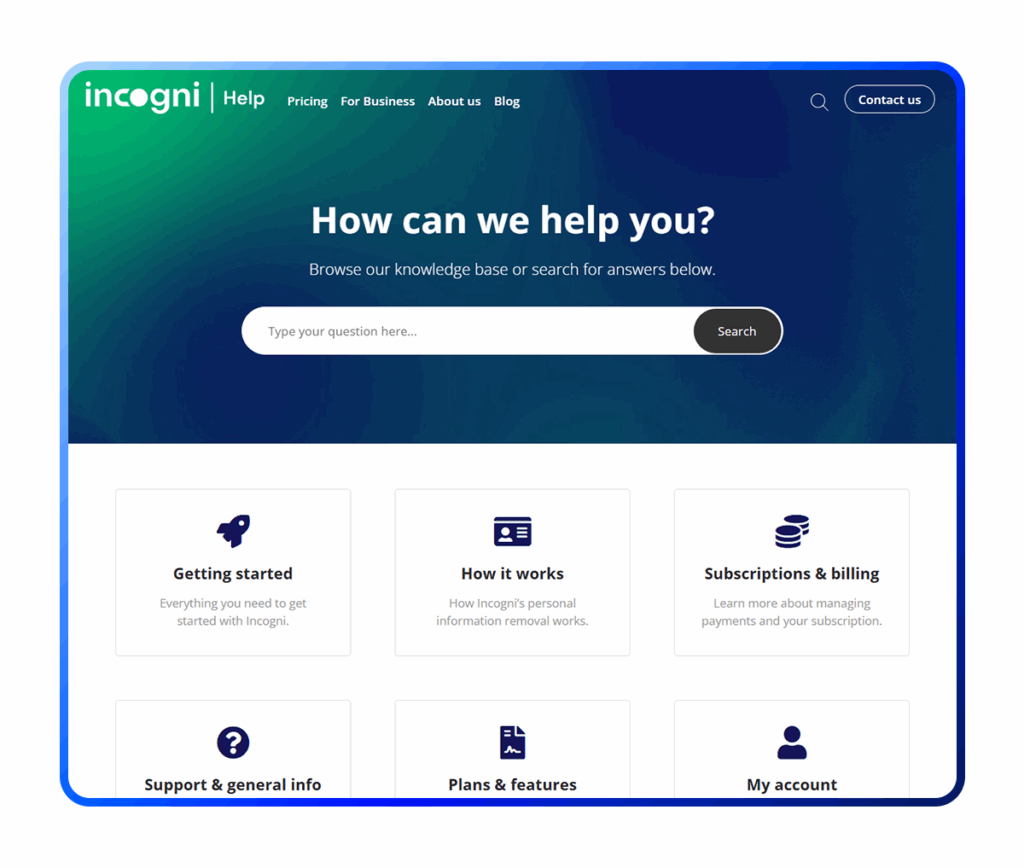
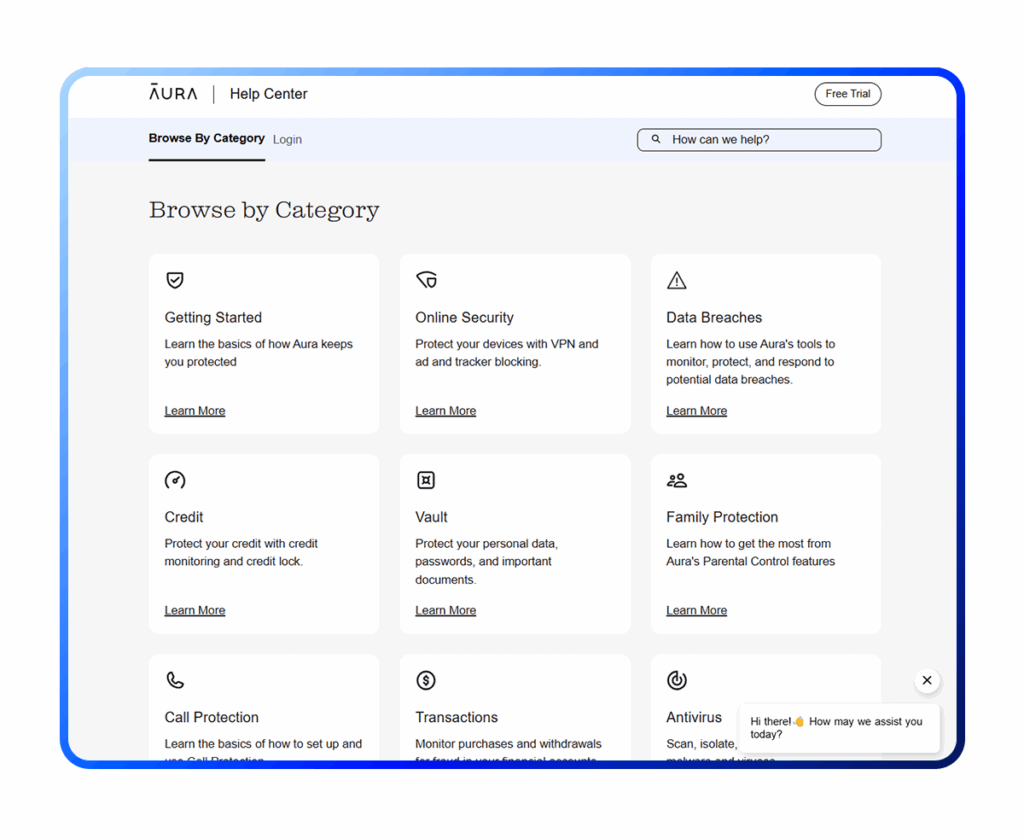
Both services also offer dedicated self-help support pages.
These pages provide answers to common questions—ranging from quick explanations to more in-depth information—as well as helpful tutorials on how various features work, how to activate them, and more.
But that’s not all—
Incogni also offers step-by-step guides on how to opt out of specific people search sites, protect yourself from spam and scams, and improve your overall online privacy.
You can find these helpful resources on their blog.
4. A closer look at business and enterprise options
In short
Aura offers small businesses the ability to purchase subscription packages of its standard plan for employees and customers.Incogni provides Ironwall—a custom service designed for businesses, courts, healthcare providers, government agencies, and more, featuring tailored protection and dedicated support.
Businesses often have different needs than individual customers.
That’s why Incogni offers a separate service called Ironwall by Incogni, which is dedicated to helping businesses, organizations, and government entities protect their people’s privacy.
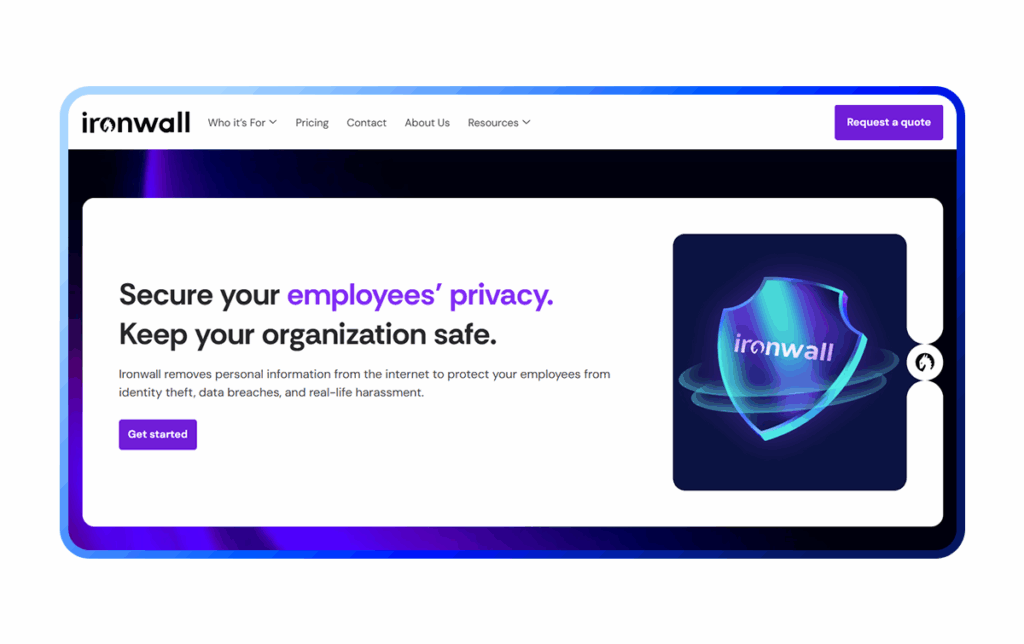
With its own team and resources, Ironwall can work closely with each client to understand their needs and provide the best protection possible.
You can read more about Ironwall here.
Aura, on the other hand, takes a different approach.
Aura takes a simpler approach—businesses can purchase group licenses for its consumer plans, but no enterprise-grade customization is offered.
Unlike Incogni’s Ironwall, there is no tailored approach to data removal.
| Offered protection | Incogni | Aura |
| Companies | ✔️ | ✔️ |
| Courts | ✔️ | ❌ |
| Law enforcement | ✔️ | ❌ |
| Human services professionals | ✔️ | ❌ |
| Healthcare institutions | ✔️ | ❌ |
| Government agencies | ✔️ | ❌ |
| Custom-fit protection | ✔️ | ❌ |
5. Exploring bundle deals and packaged services
In short
Aura is a standalone service with no bundle options, but it comes packed with plenty of extra features—making it competitive with other services that offer bundles.Incogni, on the other hand, can be bundled with top privacy tools like NordVPN and Surfshark, giving you all-in-one protection.
Aura sets a very high bar when it comes to overall value.
In addition to data removal, it comes loaded with extra features like a VPN, antivirus, and more.
No other service offers such a broad range of features in one package.
However—
You can bundle Incogni with leading VPN services like Surfshark and NordVPN, significantly boosting the value you get.*
When you add the features that come with either Surfshark or NordVPN, the combined offering can easily rival Aura’s feature-packed service.
*Incogni is available as part of the Surfshark One+ plan; with NordVPN, you can add Incogni at the checkout stage.
Incogni and Aura are both great services, but…
Incogni and Aura are both great services, but they meet different needs.
Aura is ideal if you want an all-in-one privacy suite: data removal, credit monitoring, antivirus, VPN, and more.
Incogni, on the other hand, is a data removal specialist, focused solely on removing your personal information from the web.
While Aura offers an impressive range of features, data removal feels more like an add-on rather than a core focus.
This means you’ll get decent protection across the platforms Aura covers, but it may not be the best in the market specifically for data removal.
Incogni dedicates all its resources to data removal, continually expanding its coverage and improving effectiveness.
So, the real question is: how important is data removal to you?
If data removal is just part of your privacy needs, Aura is a solid, full-featured option.
But—
If data removal is your top priority—and you want greater transparency, custom takedowns, and wider broker coverage—Incogni is likely the better fit.
And if you’re looking to combine strengths, Incogni can be bundled with VPNs like Surfshark or NordVPN for a more complete solution.
Our methodology
We’ve made this comparison based on our own experiences using Incogni and Aura, information provided by both services, and other sources.
Here are some more details about our methodology.
- Pricing check: We looked up all pricing details on November 3, 2025, directly on each service’s website:
- Feature check: We checked each service’s features by using their websites and reading their published info.
- Broker list check: We got broker coverage from each service’s website:
- Claim check: We checked marketing claims by comparing them with actual service details, terms, and information found online.
What this comparison does:
- Compares features, prices, and broker coverage using official company information
- Checks if marketing claims match actual service details
- Gives clear data to help you decide.
What this comparison doesn’t do:
- Test how well removal services work
- Review customer satisfaction or support
- Recommend which service is best, based on results.
Limitations:
- Features and prices may change after this comparison is published
- Broker lists could be updated by the companies at any time
- Your own experience may be different from what’s described here
- Since this was written by Incogni, you should also check other sources for a fuller picture.
How does Incogni compare to other data removal services? Check these comparisons:
Related articles
- Kanary Review [2026]–A Comprehensive Buyer’s Guide

- Aura Review [2025] – A Comprehensive Buyer’s Guide to Aura’s Data Removal Service

- Incogni Review – A Comprehensive Buyer’s Guide [2025]
- Optery Review [2026] – A Comprehensive Buyer’s Guide
- Onerep Review [2026] – A Comprehensive Buyer’s Guide

- DeleteMe Review – A Comprehensive Buyer’s Guide