411.com Opt Out & Remove Your Info
411.com doesn’t run its own opt-out.
It’s a Whitepages property, so every removal request actually goes through Whitepages. That redirect is where most people give up. Don’t—it’s the right path.
But—
There’s a catch worth knowing up front: the standard Whitepages form verifies your request with an automated phone call. No phone number, no removal—at least not through the form. There is a workaround, and we’ll get to it.

Opt-out process:
10–15 minutes
Removal time:
up to 15 days
Requirements:
your Whitepages profile URL and a phone number for verification
Cost:
free
This guide is part of Incogni’s free educational resources.
Some data brokers and people search sites need a manual push—Incogni’s custom removals are unlimited, so you can submit as many pages as you want and have your personal info cleared.
🛡️ 30-day money-back guarantee
How to opt out of 411.com step by step
Note: 411.com removal runs through Whitepages, its parent company, because the two share the same database.
Find your listing on Whitepages
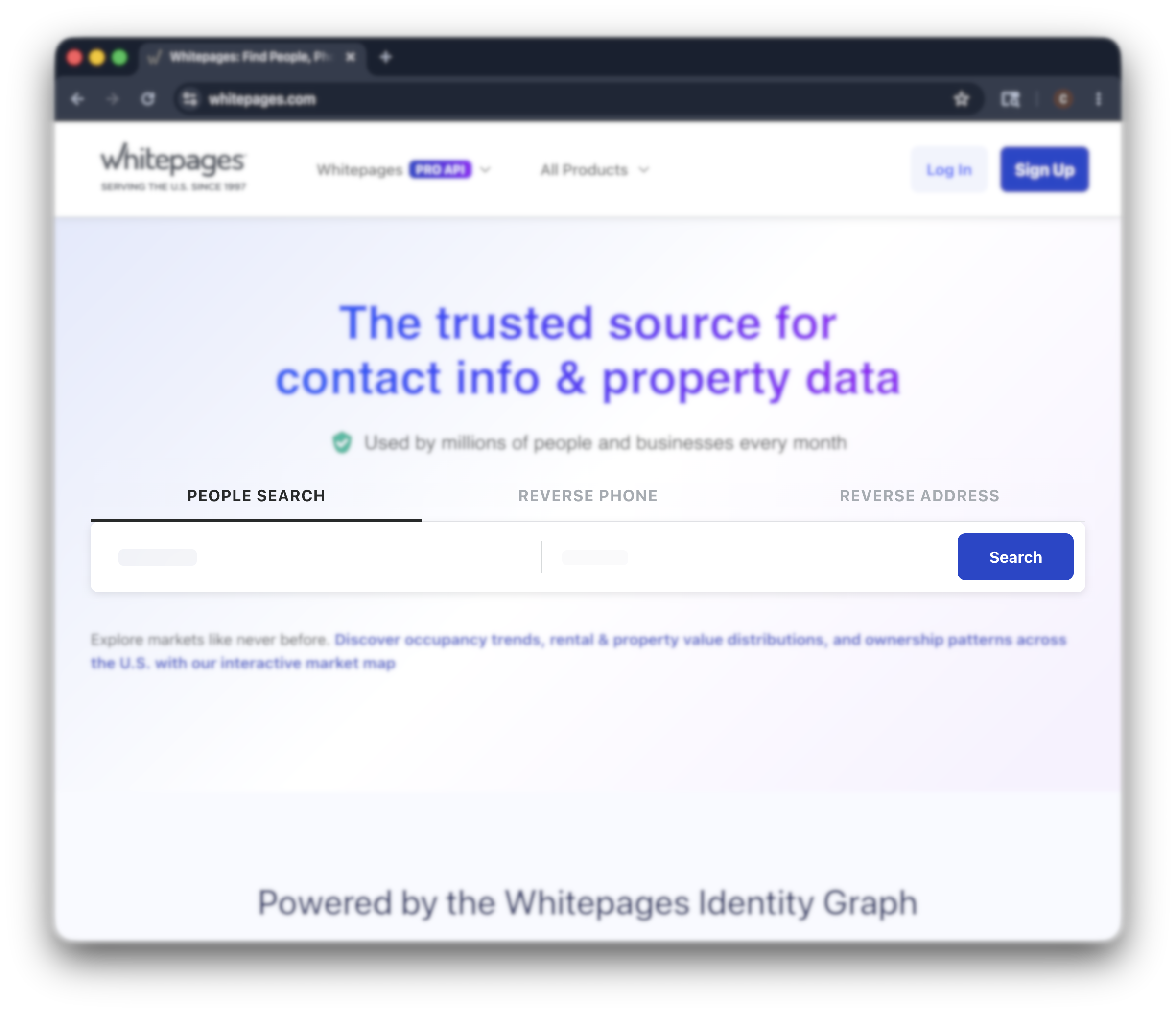
411.com is powered by the Whitepages database, and the opt-out form wants the URL of your Whitepages profile—not a 411.com page.
So start on whitepages.com and search your name, adding your city or state if there are several matches.
Open the result that’s actually you.
Check the age, the address, the relatives listed before you go further.
If you’ve already found yourself on 411.com, the same person is listed on Whitepages under the same data.
Copy the listing URL
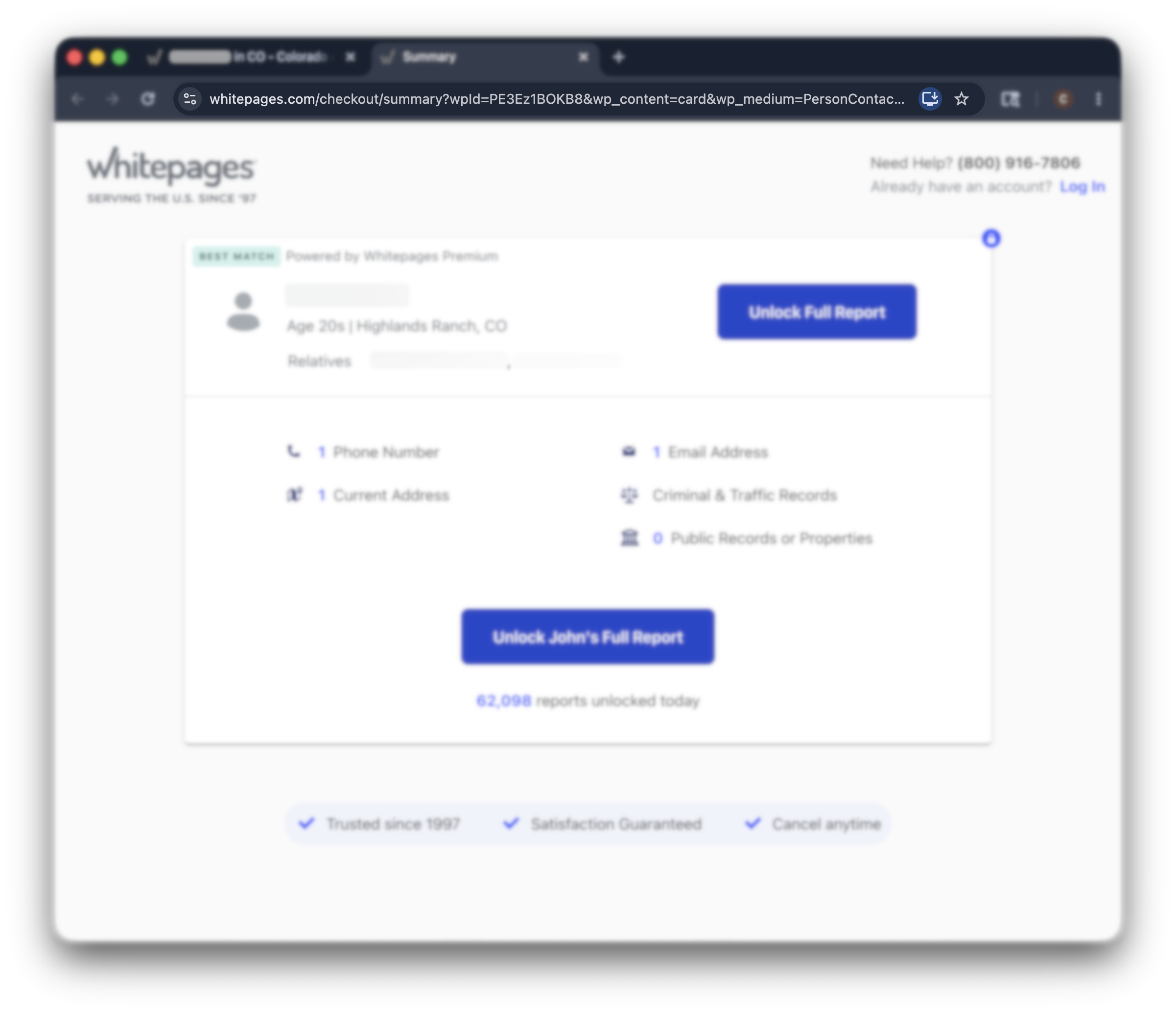
With your Whitepages profile open, copy the full URL from your browser’s address bar.
That URL is what the form uses to pin down your record. A 411.com link can get rejected, so use the Whitepages one.
Open the Whitepages opt-out form
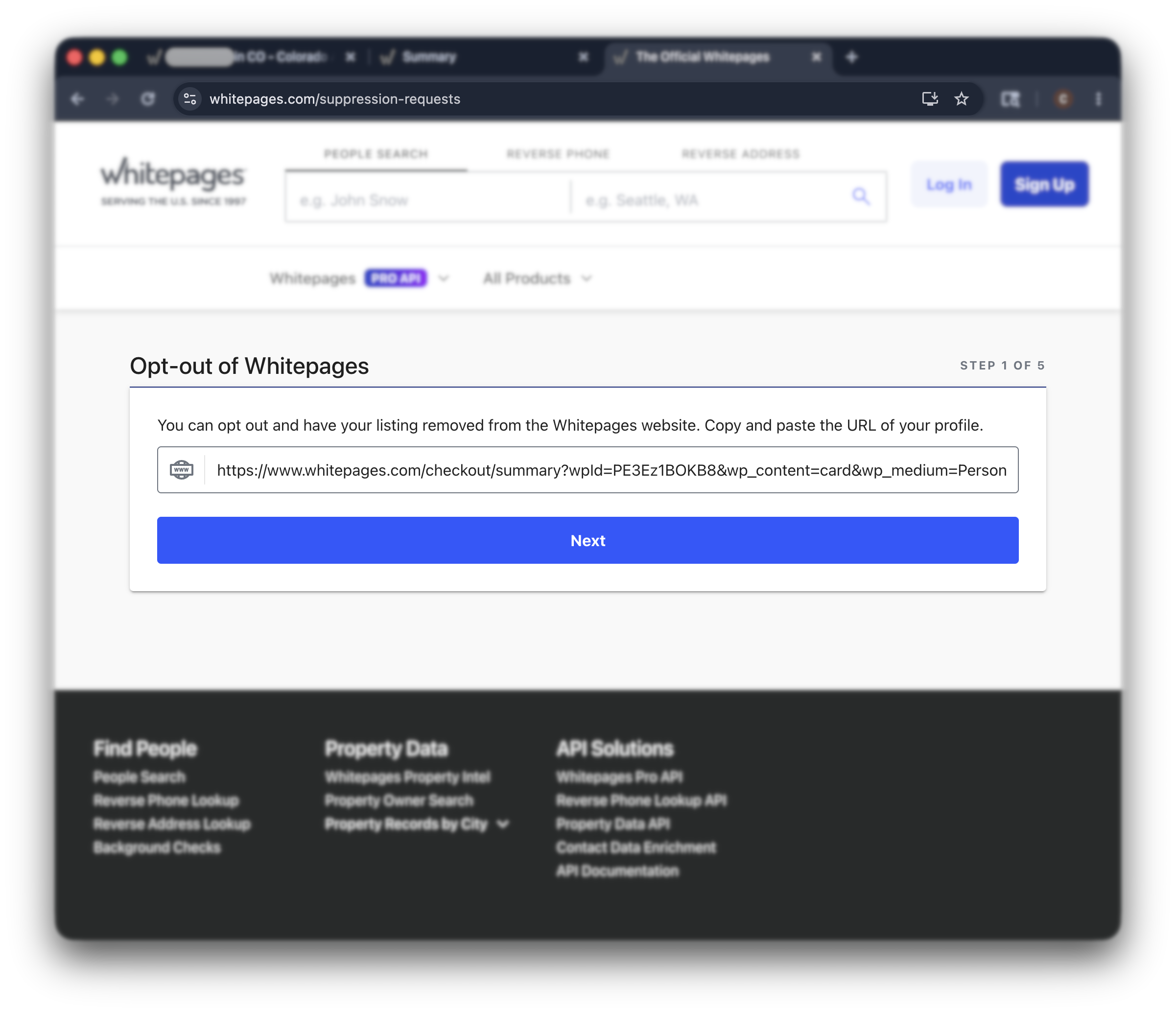
Here’s the part that throws people: 411.com has no opt-out button of its own.
It’s owned by Whitepages, and removals run through Whitepages.
Go to whitepages.com/suppression-requests, paste your Whitepages profile URL into the field, and click “next.”
Clearing your Whitepages listing clears the 411.com one too, since they share the same data.
Pick a reason and enter your phone number
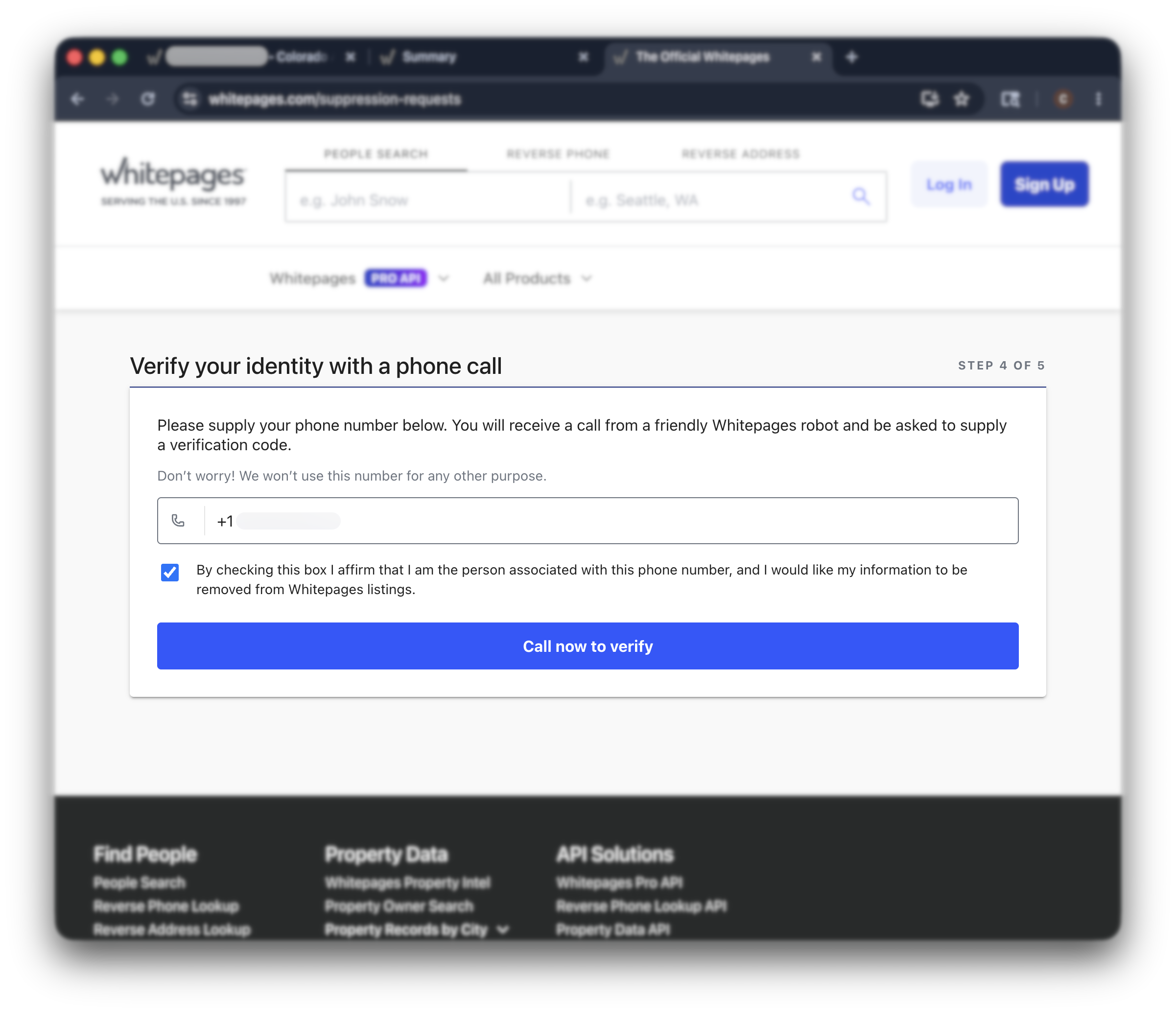
Choose a reason for removal from the dropdown. Then enter the phone number where Whitepages can reach you.
Whitepages won’t process the request through the form without a phone call to verify it.
There’s no email-only path on the form itself—though if you won’t share a number, you can ask a Whitepages customer-service agent to handle the request instead.
More on that below.
Answer the verification call
Whitepages calls within a minute or two and reads out a short code.
It’s an automated call, not a text—so a landline or a number you can actually pick up works best.
Enter the code, submit, and you’ll see a confirmation on screen. Screenshot it. That’s your proof if the listing comes back.
Alternative opt-out methods
There’s no shortcut here, and it’s better to say so than waste your time.
411.com points everything at Whitepages, and Whitepages runs removals through its suppression form.
If the phone call is the problem, you’ve got two options:
- A free number from a service like Google Voice can take the verification call.
- Or, if you’d rather not share a number at all, Whitepages lets you send the request to a customer-service agent instead—that’s its stated route for anyone who declines phone verification.
Either way, it’s a workaround within Whitepages, not a separate 411.com form.
Removing your Whitepages listing without a phone number
Email [email protected]—Whitepages’ own fallback for people who decline phone verification.
Send your Whitepages profile URL, full name, and city and state, and ask them to suppress the listing.
It’s slower and sometimes needs a nudge, but it’s a real way through without a phone.
Subject: Opt-out request—[Your Full Name]
Hi Whitepages privacy team,
I’m requesting that you suppress my listing under applicable US privacy laws. I’d prefer not to complete phone verification, so I’m submitting this request directly per your stated option for opting out without a phone number.
Listing details:
- Full legal name: [First Middle Last]
- Current city and state: [City, State]
- Whitepages profile URL: [paste link]
- Past addresses: [list any]
This request also covers my 411.com listing, which runs on the same Whitepages data. Please confirm once the suppression is complete.
Thanks, [Your Name]
Watch out for the other 411 sites
In short: 411.com is not the same as 411.info or Contacts411—each is a separate site with its own opt-out.
“411” isn’t one company. It’s a cluster of look-alike directories, and clearing one does nothing for the others.
411.com goes through Whitepages, as covered above. The others don’t.
411.info
Heads up: 411.info’s old self-service removal page is gone.
Visit 411.info/manage now and all you’ll see is “residential listing management has been retired.”
So the manage-your-listing route no longer works.
Instead—
Email the 411.info Privacy Officer at [email protected] and ask them to delete your listing. You can use the template we provided earlier on.
Include your full name, the city and state on the record, and the phone number listed, and state that you’re requesting removal of your personal information.
There’s no fee.
If you’d rather put it in writing, the same Privacy Officer takes mail at 411.info Corp., 7918 Jones Branch Drive, Suite 400, Tysons, VA 22102.
Contacts411
Contacts411 runs its own opt-out, separate from both 411.com and 411.info. Find your listing on the site, then use its removal page to submit the request.
What to expect after opting out
Give it up to 15 days, though it’s often faster.
Some listings drop within a day or two. Whitepages gives itself up to 15 days, and 411.com pulls from the same database, so both should clear in that window.
Then check both sites.
Search your name on whitepages.com and 411.com. If neither returns your listing, you’re done. Keep that confirmation either way.
Suppressed isn’t deleted.
This is the part worth understanding. The opt-out hides your listing from search. It doesn’t erase the public records underneath it—the property filings, voter rolls, and phone directories that built the listing in the first place stay exactly where they are.
But—
That’s why it doesn’t always hold. Whitepages re-scrapes those records on a rolling basis, so a fresh 411.com listing can show up months later, built from a new pass. Your opt-out worked. The data pipeline is what brings you back.
Troubleshooting
In short: Most 411.com opt-out trouble comes down to three things: the Whitepages form rejecting your URL, the verification call never arriving, or the listing returning months later. None of them means you’re stuck.
The form won’t accept your URL
First, make sure you used your Whitepages profile URL, not a 411.com link—the form is built for Whitepages pages and will often reject a 411.com one.
And copy it from the profile page itself, not from a search results page.
The form is picky about format and chokes on extra tracking junk.
Open the listing directly, copy the clean URL from the address bar, and if it still won’t take, paste it into a plain-text editor first to strip any hidden formatting, then copy it from there.
The verification call never came
Wait five minutes—it’s sometimes slow.
Still nothing?
Check whether your phone is blocking unknown or robocall numbers; spam blockers catch the Whitepages call all the time.
If it keeps failing, request a new code, use a Google Voice number that can take the call, or email them to remove the listing.
Your listing came back
A listing that returns weeks or months later usually means Whitepages picked your data back up from a fresh public-records feed. It doesn’t mean your first request was ignored.
Run the opt-out again. If the same listing keeps reappearing, that’s your sign that doing this by hand isn’t a fight you’ll win.
Other data brokers that may have your info
411.com didn’t generate your data. It pulled it from public records, same as everyone else.
The same name, address, and phone records behind your 411.com listing are sitting on 411.info, Contacts411, Whitepages itself, Spokeo, BeenVerified, and plenty more.
Every one has its own opt-out. And most put your data back within months.
You can grind through them yourself with our broker-specific guides, starting with Whitepages.
Or—
Hand off the whole job.
Working through the 411 sites one by one—paid traps, robocalls, and all—is exactly the kind of busywork that never ends, because the listings keep coming back.
Incogni covers 420+ data brokers similar to 411 and Whitepages, sends the opt-outs for you, and files them again whenever your data resurfaces.
Want to go the DIY route? We’ve written around 85 data-broker opt-out guides that make manual data removal simple. Dive in!
FAQ
Does the 411.com opt-out actually work?
Yes—for the listing you remove. But it suppresses your record rather than deleting the public data behind it, so a new listing can appear later as Whitepages refreshes its sources. The opt-out works; it just isn’t permanent.
How did 411.com get my information?
From public records and commercial data that Whitepages collects and republishes—property records, voter registrations, phone directories, and more. None of it needs your permission, and you’ll never get a notice that a listing exists.
Is it legal for 411.info to charge me to remove my data?
411.info is a separate site from 411.com, and yes, it pushes a paid “fast removal” of around $2.95. Many users report that paying appears to be the only route it offers—and it operates in a legal gray area, since sites like this aren’t required to remove data for free. Look for a free remove-or-hide option if one’s available, but be prepared that 411.info may not make one obvious.
Can 411.com add my information again, even after they approve my opt-out request?
Yes, 411.com (and Whitepages) can add your information again, even after you’ve opted out of their data collection activities. This is a big problem with most data brokers. It happens because data brokers are constantly scraping and purchasing data: if incoming data isn’t properly identified as belonging to you, a new listing will be created in your name.
This is why we recommend regularly checking back with sites like 411.com to make sure your data doesn’t reappear under a new listing. When it does, simply repeat the opt-out procedure using the URL of the new listing.
Does 411.com have the right to use my data?
Yes, 411.com has the legal right to use your data. Given that it’s governed by laws like the CCPA, you also have the right to request that your data be removed from its search results and databases. Depending on your location, 411.com might have no choice but to honor your request.